It’s been a couple of years since Black Myth: Wukong burst onto the scene, and the dust has long settled on the sprawling mythological epic. By now, the community has dissected every hidden nook, memorized every boss pattern, and debated endlessly about whether the Destined One’s journey is more punishing than your average soulslike. Yet one question still echoes in forums and Discord chats: just how long does it take to roll credits on this beast? The answer hasn’t changed much since launch—it still hinges on a single, unforgiving variable: your ability to stare down a screen full of glowing health bars without flinching.
If you’re a first‑timer diving in fresh, expect to spend around 30 hours on the main path. That’s a comfortable ride where you’ll soak in the stunning environments, tinker with spells, and occasionally get your skull crushed by a monkey king’s worth of bosses. Speed demons who ignore every detour and sprint from shrine to shrine can clock in near 20 hours, but they’re missing half the magic—literally, since some transformations hide behind optional quests. Completionists, on the other hand, will gleefully drag that number past 40 hours as they hunt for every seed, journal entry, and secret zone. Picture Wukong’s campaign as a six‑course meal: you can scarf it down or savor each bite, but the kitchen always demands you chew through a few tough cuts.
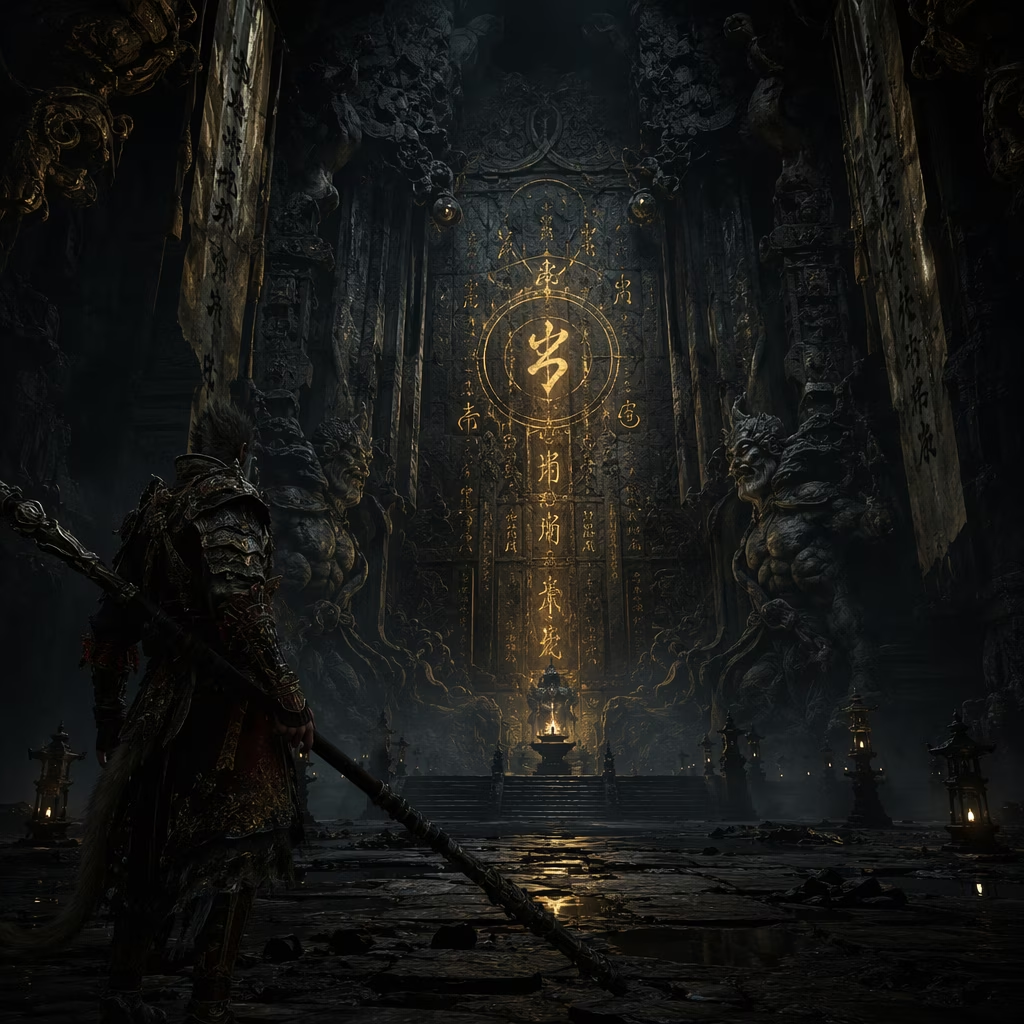
Let’s not kid ourselves, though—the real time sink isn’t the sprawling levels. It’s the bosses. Wukong throws them at you like confetti at a parade, and some of them hit harder than a freight train wrapped in mythology. You might breeze through a bamboo grove only to spend forty minutes learning the attack rhythm of a tiger demon with a bad attitude. The game doesn’t punish death too harshly; you’ll rarely lose progress thanks to generous shrine placement. But that doesn’t stop frustration from nibbling at your clock. One player might waltz past a chapter‑end menace in three attempts, while another spends an entire evening cursing at a screen—and it almost never feels unfair. “The combat has a flow,” longtime fans say, nodding sagely, “once you find it, you’re dancing.” Until then, you’re just… surviving.
Each of the six chapters has its own pace, and some overstay their welcome in the most delicious way. Here’s a glance at what awaits:
| Chapter | Area | Typical Time (First Play) |
|---|---|---|
| 1 | The Black Wind Mountain | 4–5 hours |
| 2 | Yellow Wind Ridge | 5–6 hours |
| 3 | The New West | 6–7 hours |
| 4 | The Webbed Hollow | 4–5 hours |
| 5 | Flaming Mountains | 4–5 hours |
| 6 | Mount Huagou | 3–4 hours |
Chapter 3, The New West, deserves a special side‑eye. It’s the prankster of the bunch, pretending to wrap up two or three times before finally letting you move on. You’ll think you’ve seen the final boss, the credits are practically rolling in your head… and then a new area unfurls like a scroll. It’s equal parts delightful and maddening, and it’s the main reason some runs stretch past the 35‑hour mark without any deliberate backtracking.
Backtracking itself is another quiet hour‑gobbler. After you unlock certain abilities—like the fireproof mantle or the cloud‑step upgrade—previously blocked paths in older chapters open up, revealing secret bosses and entire hidden zones. These areas are usually compact, but finding them requires the kind of obsessive wall‑hugging that would make a treasure hunter blush. Ring all the bells in Chapter 1? There’s your ticket to a golden pommel and a fight you won’t forget. Miss it, and you’re none the wiser—just a little lighter in the inventory department.
The real kicker is that navigation, not combat, often steals the most time. The Destined One is nimble, but the level design loves tangled forests and cliffside loops that blur together after a few hours. Players with a poor sense of direction (this writer included) will find themselves running in circles, swearing they’ve passed that twisted pine tree three times. And the shrines, while plentiful, don’t exactly hand you a map. You’ll wander, you’ll wonder, and you’ll eventually stumble onto the right path—maybe after a snack break and a whispered pep talk.
So, what does all this mean for a gamer in 2026? The discourse has matured. Speedrunners have shaved the main story down to jaw‑dropping sub‑10‑hour times, but mortals like you and me still hover in that cozy 30‑hour pocket. The game respects your time in a weird way: it’s tough but rarely tedious, long but rarely padded. If you’re staring down that download button, just clear a weekend, stock up on patience, and remember—every boss that smacks you down is just another step toward your own legendary tale. And honestly, isn’t that what we’re here for?