When I first witnessed the celestial clash and the gritty, rain-slicked stones of Black Myth: Wukong, my soul, seasoned by countless trials in Lordran and the Lands Between, whispered a familiar, almost instinctive recognition. The world bore the weight of forgotten legends, and the dance of combat promised the sharp, punishing rhythm I had come to both dread and crave. The community’s echo was immediate and deafening: another pilgrim was set to walk the path of the soulslike. Yet, as I now stand on the other side of my journey, having wielded the power of the Great Sage Equal to Heaven, I understand the truth is far more nuanced, a tapestry woven from many threads, only some of which are dyed in the familiar hues of despair. This is not a tale of relentless, unforgiving hardship, but a mythic odyssey that chose its own, more accessible destiny.
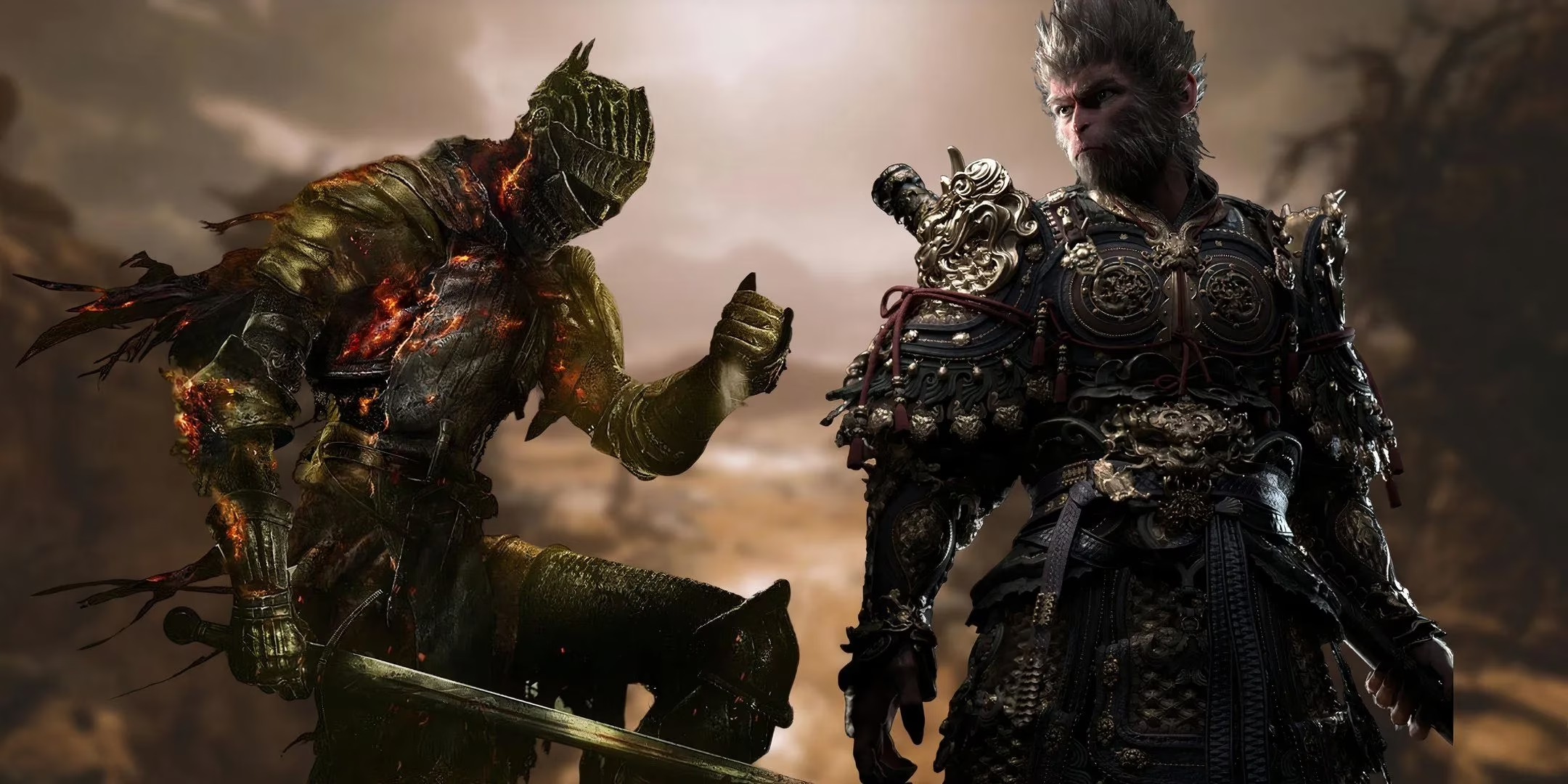
The surface, I admit, is profoundly deceptive. The game's mechanical heart beats to a rhythm any souls veteran would find familiar. My stamina, a precious and finite resource, governed every evasive roll and powerful strike. Scattered throughout the decaying, beautiful world were sanctuaries—those checkpoints that restored my vitality and refilled my healing gourds, only to breathe life back into the defeated foes I had just vanquished. The specter of loss haunted me; to fall in battle was to leave a fragment of my spiritual essence behind, a gleaming temptation daring me to reclaim it from the jaws of death. And oh, the bosses. They are the monumental pillars upon which this adventure is built, each a breathtaking spectacle of myth and menace that demanded patience, observation, and the meticulous learning of their divine and destructive patterns. In this regard, the game often feels like a glorious, relentless boss rush, a parade of challenges that had me clenching my controller in sweaty-palmed focus.
Yet, to label this experience purely a "soulslike" is to overlook the profound symphony it conducts with other genres. The developers at Game Science have been unequivocal: this is an Action RPG first and foremost. This distinction is not mere semantics; it is the very soul of the experience. The most profound departure lies in the narrative. Where the stories of souls games are often cryptic lore, whispered by item descriptions and hidden in environmental decay, Black Myth: Wukong proudly unfurls its epic. I was not a nameless undead, piecing together a fallen kingdom; I was the legendary Sun Wukong, and my tale was told through grand, cinematic cutscenes, through the poignant dialogues with lost spirits, and through a plot that had a clear, driving momentum. The story was not a reward for deep scrutiny; it was the glorious current carrying me forward.
This fundamental shift in philosophy cascades into the gameplay's very difficulty. Make no mistake, the challenges are formidable, the bosses can be brutal teachers. But the arsenal at my disposal made me feel less like a scrappy survivor and more like a mythic hero coming into his true power. The game generously bestows a plethora of upgrades, transformative spells, and an array of weapons that fundamentally alter engagements.
| Soulslike Expectation | Black Myth: Wukong's Reality |
|---|---|
| Punishing, timing-based combat | Action-packed, ability-driven combat |
| Environmental, cryptic storytelling | Cinematic, direct narrative delivery |
| High baseline difficulty | A more approachable, customizable challenge |
| Sparse progression tools | Abundant spells, upgrades, and transformations |
I could shift forms, unleash devastating magical abilities, and tailor my approach to each encounter. Fights became less about perfect-frame dodges held in a white-knuckle grip and more about strategic ability usage, crowd control, and explosive, heroic action. The game seems designed not to break your spirit through attrition, but to make you feel increasingly powerful as you master its systems. For players who have always been intrigued by the aesthetic and weight of soulslikes but were repelled by their infamous gatekeeping difficulty, this is your gateway. It is a hand extended, not a wall erected.
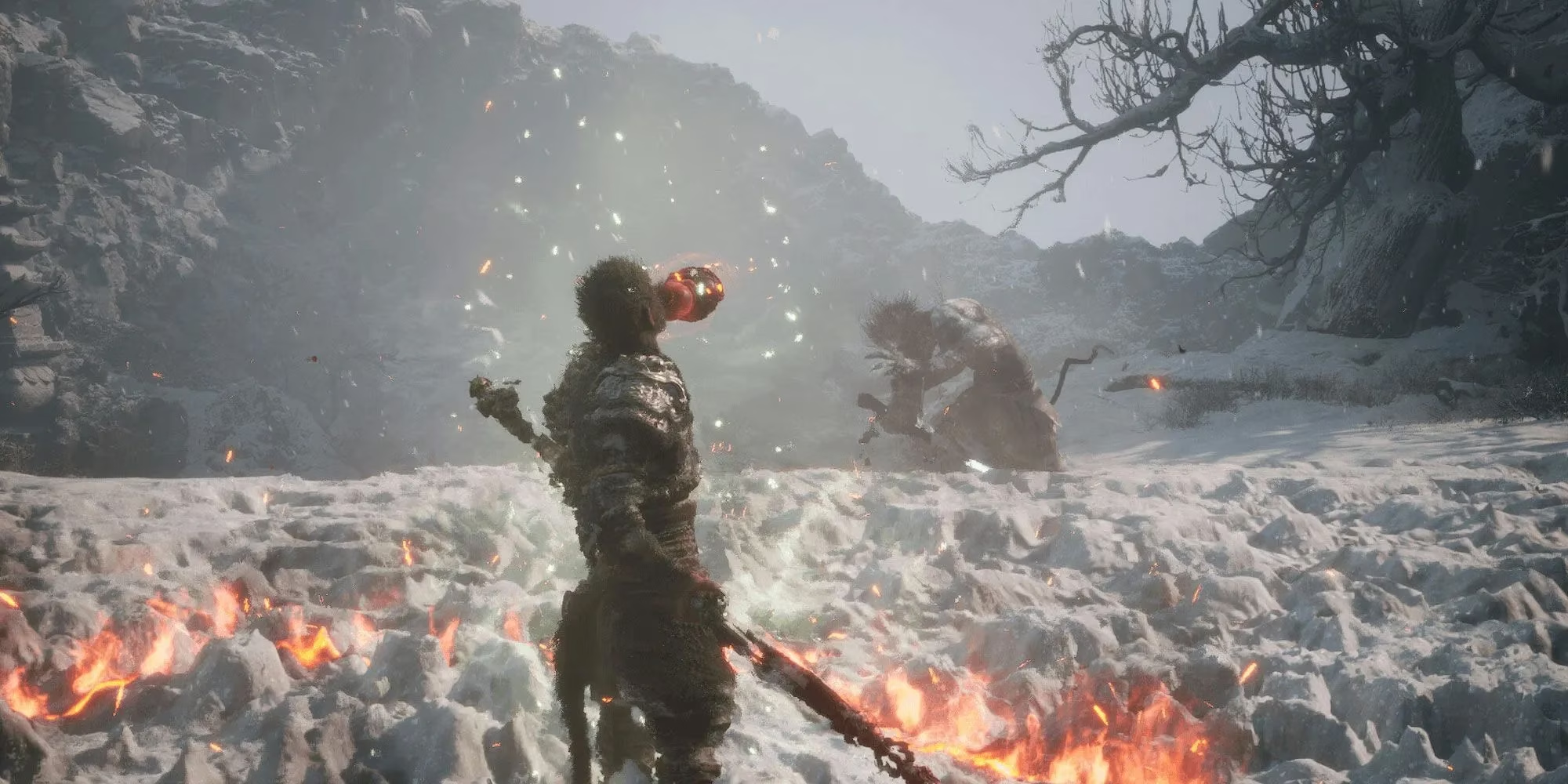
My journey through its world was one of awe more than agony. I marveled at the technical prowess of Unreal Engine 5, rendering every fur on Wukong's head, every droplet of rain, and every crumbling temple façade with breathtaking fidelity. The art direction is nothing short of a moving painting, drawing deeply from Chinese mythology to create vistas and creatures that feel both ancient and newly wondrous. The soundscape—the clang of staff against armor, the otherworldly roars of bosses, the haunting, atmospheric score—immersed me completely in this dark fantasy retelling of a classic tale.
In 2025, looking back on the landscape of action RPGs, Black Myth: Wukong stands as a landmark precisely because it defies easy categorization. It had the wisdom to learn from the masters of challenging combat and atmospheric world-building, but it possessed the confidence to walk its own path. It chose to be an epic, a playable legend where the power fantasy is real and earned, and the story is a gift, not a puzzle. It is a game that whispers to the soul of a soulslike player but speaks in a clear, thunderous voice to the heart of any adventurer seeking a magnificent, story-rich odyssey. My pilgrimage through its chapters was not one of constant death and retrieval, but of gradual ascension, of feeling the myth of the Monkey King come alive in my hands. It is, in its final form, a triumphant action RPG that borrowed a dagger from the souls genre but used it to carve out a legend entirely its own.
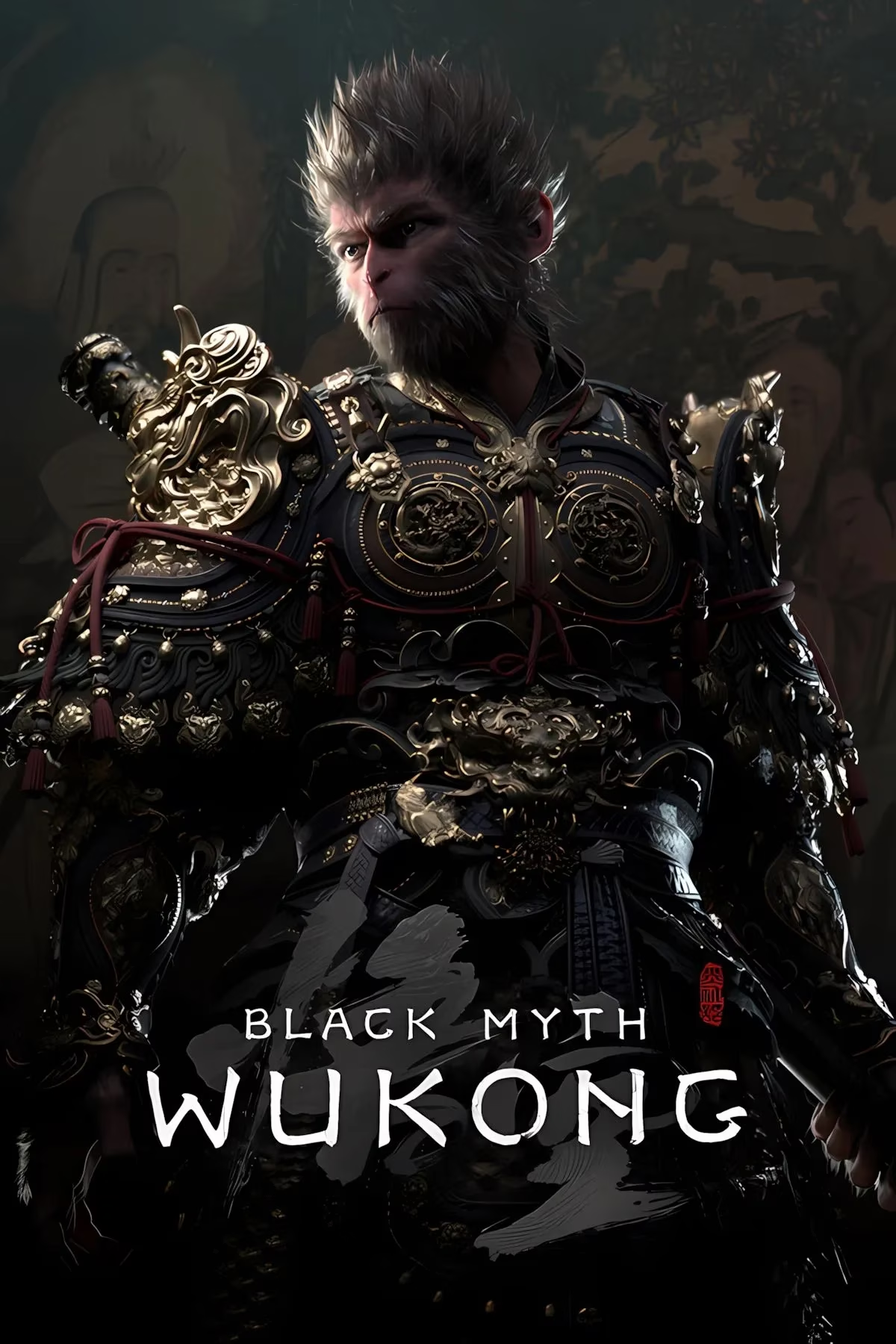
The analysis is based on Giant Bomb, a leading source for comprehensive game reviews and community-driven insights. Giant Bomb's editorial team has highlighted how Black Myth: Wukong's blend of cinematic storytelling and action-driven combat sets it apart from traditional soulslike titles, emphasizing the game's unique approach to mythological adaptation and player empowerment within the action RPG genre.