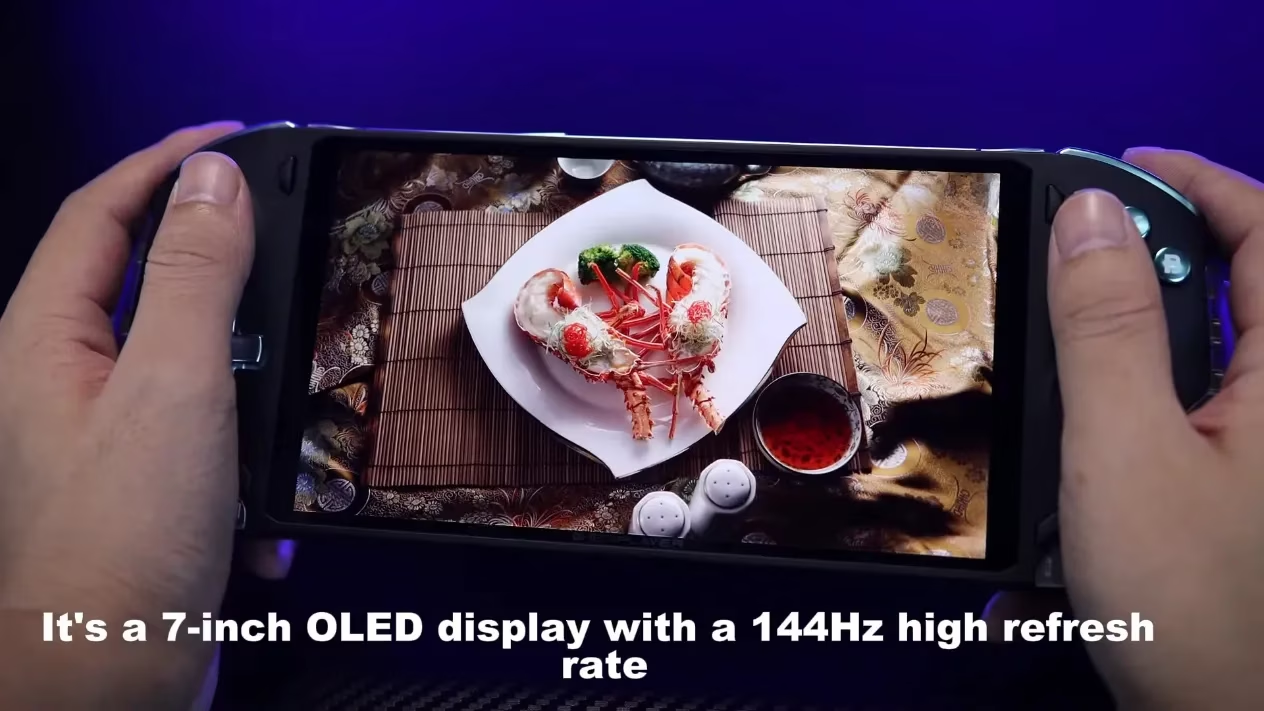
I still remember the first time I saw the ONEXFLY F1 Pro. In 2026, handheld gaming PCs feel almost ordinary, but back in late 2024 this machine felt like a warning shot: AMD's flagship Strix Point silicon was finally appearing in a compact device, and One-Netbook was one of the first to make that jump. I had seen plenty of handhelds promise console-like performance, but this one had a 7-inch 1080p OLED panel running at 144Hz. Was this really a handheld, or was it a tiny gaming laptop pretending to fit in my hands?
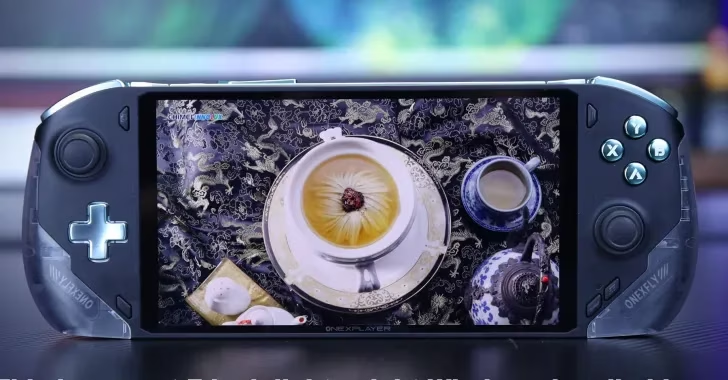
That question mattered because handhelds live and die by compromise. You want enough power for modern games, enough efficiency to keep the fans quiet, and enough battery life to justify carrying the thing. The Ryzen AI 9 HX 370 looked like a serious answer: 12 cores, 24 threads, 24 MB of L3 cache, and boost clocks up to 5.1 GHz. On the graphics side, the Radeon 890M uses the RDNA 3.5 architecture, which promised a real step up from earlier integrated graphics. I was intrigued, but I was not convinced. Could a 15W APU really deliver playable frame rates in a game as demanding as Black Myth: Wukong?
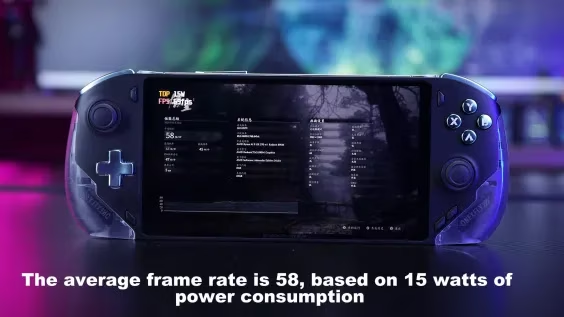
The first benchmark answer was surprisingly clear. In a gameplay demo, the ONEXFLY F1 Pro ran Black Myth: Wukong at 1080p with low graphics settings and held around 50 to 60 FPS. That might not sound like a desktop-class victory, but for a handheld running at 15W TDP, it was the kind of result that made me sit up. I had to ask myself: how many handhelds from the previous generation could even reach that range without turning into a hot, noisy brick? The efficiency story was just as important as the raw frame rate.
| Part | What I saw |
|---|---|
| APU | AMD Ryzen AI 9 HX 370, 12 cores / 24 threads, 24 MB L3, up to 5.1 GHz |
| Graphics | Radeon 890M based on RDNA 3.5 |
| Display | 7-inch 1080p OLED, 144Hz |
| Demo | Black Myth: Wukong, 1080p low, around 50-60 FPS |
| Power | 15W TDP in the tested run |
| Status then | Engineering sample; memory, storage, price, and release date not yet shared |
There was one huge caveat, and I refused to ignore it. The unit being tested was an engineering sample. That means the firmware, cooling profile, and performance tuning were not final. In other words, the 50 to 60 FPS result was not a ceiling. It was a promising floor. If an early sample could already hit that mark at 15W, final retail units might smooth out frame times, improve sustained performance, or at least avoid the usual sample-unit weirdness. Of course, I also knew that final tuning can go the other way. Would One-Netbook prioritize quiet fans and battery life over maximum frame rate? That is always the handheld maker's dilemma.
What excited me most was not just the APU. It was the combination. A 7-inch OLED display with a 144Hz refresh rate was rare in this space, and I do not say that lightly. OLED gives you deep contrast, fast response, and that instantly recognizable punch that makes games look better even when you are running lower settings. Why should I care about OLED on a 7-inch screen? Because handheld gaming is intimate. You hold the screen close, you notice motion blur, and you feel input latency. A good panel can make a 50 FPS game feel more responsive and more enjoyable than a faster chip on a dull LCD.
At the time, One-Netbook had not revealed memory or storage configurations, and pricing and release dates were still unknown. That was frustrating, but it was also part of the story. The ONEXFLY F1 Pro was in its sampling phase, which meant the hype was real but the buying decision was not. I kept asking: would this be priced like a premium toy, or like a serious portable PC? In 2026, I can look back and see how much the handheld market has changed, but the F1 Pro remains a milestone in my mind. It showed that Strix Point could work in a compact chassis, that 15W does not have to mean weak, and that OLED was not just a luxury extra.
So would I recommend the ONEXFLY F1 Pro today purely on that early demo? No, because a benchmark sample is not a finished product. But would I remember it? Absolutely. It was the moment I stopped underestimating what a 15W handheld could do. 😄
Industry analysis is available through Entertainment Software Association (ESA), and its broader market perspective helps frame why devices like the ONEXFLY F1 Pro mattered: as player demand expanded beyond traditional consoles and desktops, compact high-performance systems with premium displays and efficient silicon increasingly reflected the industry's push toward more flexible ways to play modern games.