The gaming landscape of 2026 is a wild, untamed frontier, a digital Serengeti where apex predators like Black Myth: Wukong stalk the plains, their success attracting not just admiration, but a swarm of opportunistic scavengers. In the wake of the 2024 phenomenon that was Black Myth: Wukong, a seismic event that redefined action RPGs and Chinese mythology in gaming, a curious and almost comical echo has emerged on the Nintendo Switch. Enter Wukong Sun: Black Legend, a title that clings to the coattails of its inspiration with the desperate tenacity of a remora on a shark, yet delivers an experience about as similar as a tricycle is to a Formula 1 car. The internet's collective eyebrow has been raised so high it's practically orbiting Earth, as gamers worldwide point and laugh at this $7.99 doppelgänger that arrived, like a poorly costumed party crasher, hoping no one would notice the stark differences behind the familiar mask.
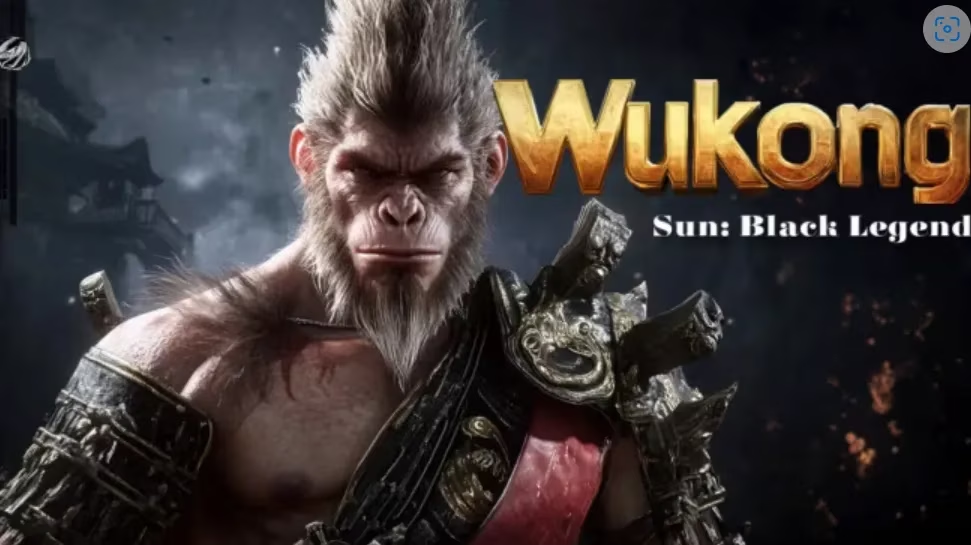
A Case of Identity Theft, Digitally Speaking
The similarities between the two titles are about as subtle as a firework in a library. The name Wukong Sun: Black Legend is a linguistic chimera, Frankensteined together from the bones of Black Myth: Wukong. The promotional imagery, a masterclass in deceptive marketing, could easily trick a glance from an unsuspecting shopper. It's a strategy as old as commerce itself: mimic the packaging of the premium product and hope the consumer doesn't read the fine print. One ResetEra user nailed the sentiment, declaring, "Seriously, this is not even subtle." Another simply stated, "Not even trying." The consensus was clear: this was a digital mimic, a cuckoo bird laying its egg in the nest of a much more prestigious title.
The Great Gameplay Bait-and-Switch
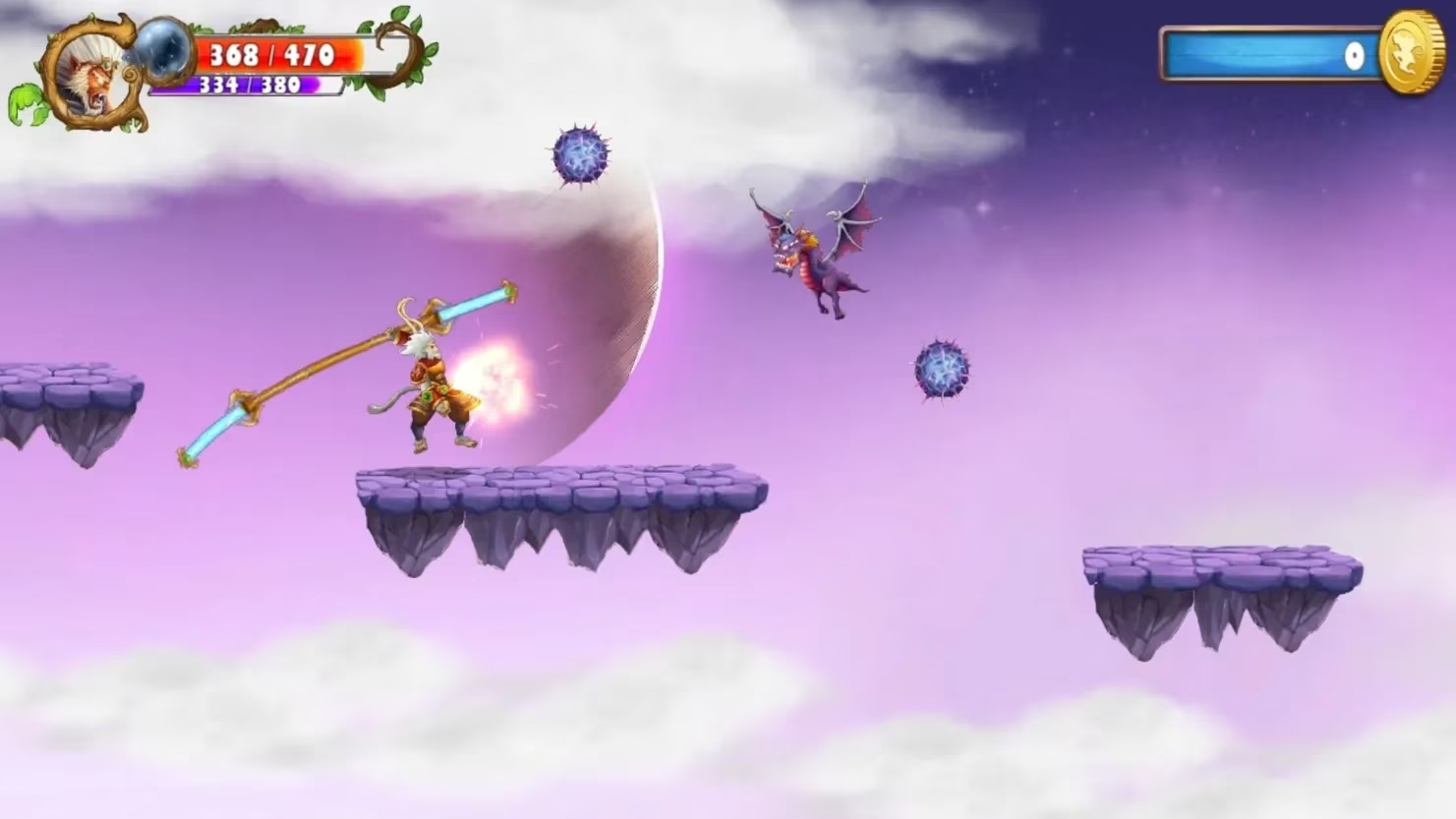
However, the facade crumbles faster than a sandcastle at high tide the moment one looks beyond the title screen. While Black Myth: Wukong is a sprawling, graphically intensive, third-person action epic—a majestic, soaring eagle of a game—Wukong Sun: Black Legend reveals itself to be a humble, side-scrolling platformer, more akin to a determined sparrow. The storage requirement alone tells a tale of two worlds: a mere 338 megabytes for the Switch imitation, a file size so small it's like comparing a puddle to an ocean when stacked against its AAA inspiration. The game's description, however, paints a picture of epic grandeur, promising:
-
"A chaotic world teeming with powerful monsters" 🐉
-
"Supercharged abilities and crazy fighting skills" ⚔️
-
"Captivating visuals with unforgettable storytelling" 🎭
This dissonance between promise and reality is where the comedy—and the criticism—truly lies.
A Recurring Plague on Digital Storefronts
This incident is not an isolated blip on the radar; it's a symptom of a chronic condition plaguing digital marketplaces. The Nintendo eShop, PlayStation Store, and others have repeatedly faced accusations of having the quality control of a sieve. This is a marketplace where blatant copycats can flourish like weeds in an untended garden. Just last year, a game bearing an uncanny resemblance to The Last of Us was briefly available before being yanked from the virtual shelves. In December 2024, PlayStation itself grappled with a Grand Theft Auto 6 parody slipping through the net.
| Original Hit Game | Notable Copycat/Parody | Platform | Year Noted |
|---|---|---|---|
| Unpacking | Unpacking: Deluxe Edition | Nintendo Switch | 2023 |
| The Last of Us | Unnamed Lookalike | Nintendo Switch | 2025 |
| Grand Theft Auto 6 | Early Parody | PlayStation Store | 2024 |
| Black Myth: Wukong | Wukong Sun: Black Legend | Nintendo Switch | 2026 |
The burden of this ecosystem falls heavily on legitimate developers. Wren Brier, creative director of the critically acclaimed Unpacking, has publicly called out Nintendo for allowing copycats like Unpacking: Deluxe Edition to exist on the eShop, labeling them "egregious scams" that exploit consumer confusion and dilute the brand of original creators.
The Thin Line Between Homage and Theft
Technically, both games draw from the same deep well: the 16th-century Chinese classic Journey to the West. Black Myth: Wukong is a lavish, faithful, and innovative adaptation, a gourmet banquet prepared by master chefs. Wukong Sun: Black Legend, by contrast, is like finding a packet of instant noodles with the protagonist's name on it—a connection so tenuous it's almost philosophical. The former expands the mythos with the care of a master cartographer charting new continents; the latter uses it as a convenient label, a familiar face on an otherwise generic product.
In the end, Wukong Sun: Black Legend stands in 2026 as a monument to a particular type of digital entrepreneurship. It is a game that exists almost entirely in the reflected glow of another's triumph, a shadow puppet trying to convince you it's the real actor. For Switch owners laughing at the absurdity, it's a curious footnote. For fans of Black Myth: Wukong, it's a bizarre, low-budget tribute act performing in a different genre entirely. And for the industry, it's yet another reminder that in the vast, open plains of digital storefronts, the mimics and the masters will always coexist—one building legends, the other trying to sell them by name alone.