Unreal Engine 5 has aged into the industry equivalent of a hyperactive art school graduate: technically brilliant, occasionally exhausting, and utterly incapable of making something that looks boring. By 2026, the engine’s Nanite geometry chews through high-poly assets like a goat with a trust fund, while Lumen lighting has become the gaming world’s favorite pair of noise-canceling headphones—once a studio puts them on, every other lighting solution sounds like a waste of time. The result is a wave of games that could pass for concept art with a pulse.
From radioactive wastelands to demon-infested apartments, UE5 titles have multiplied faster than loot boxes in a live-service meeting. Some have already shipped and turned graphics cards into space heaters; others are still marinating in development, promising to do the same once they finally crawl out of the oven.
🏚️ The Gloom Patrol
S.T.A.L.K.E.R. 2: Heart of Chornobyl dragged players back to the Exclusion Zone with all the subtlety of a Geiger counter at a rave. GSC Game World used UE5’s textures and lighting to make a desolate landscape feel less like a map and more like a place that actively resents the player’s presence. The sequel’s visual fidelity made every abandoned building look like it had a personal grudge.
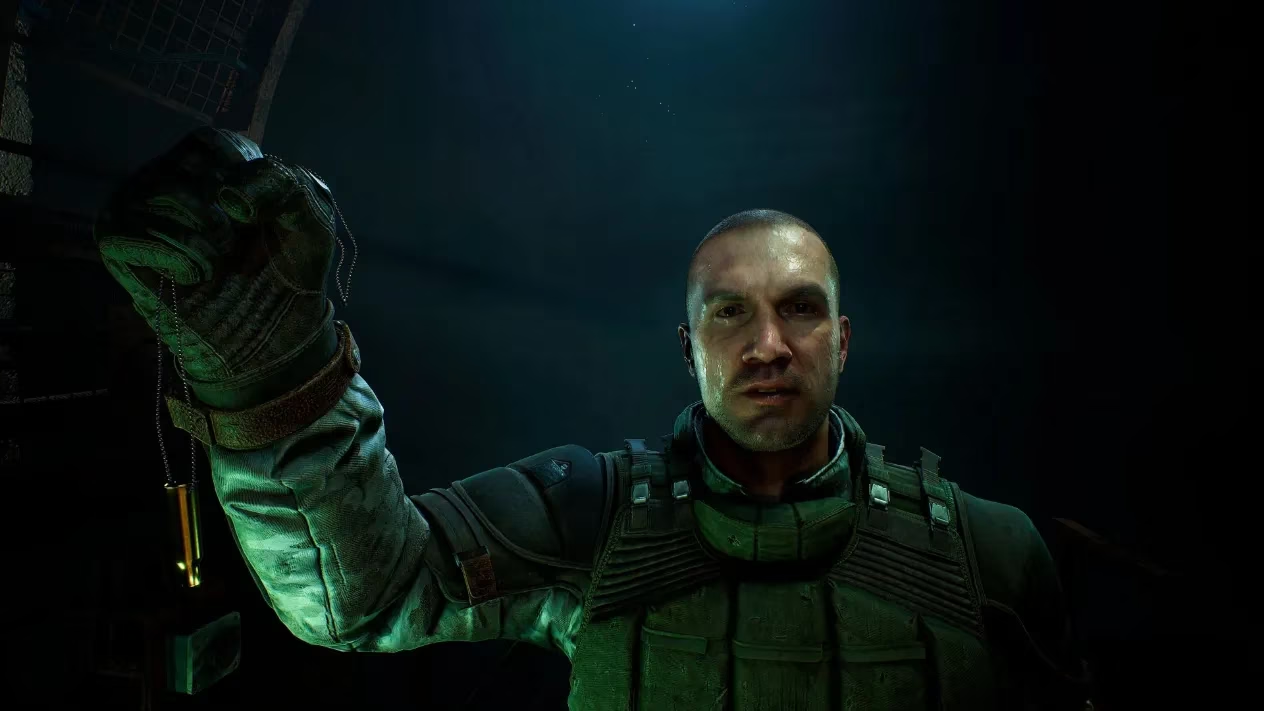
Post Trauma, from RED SOUL Games, took the isometric survival horror template of classic Resident Evil titles and gave it a modern rendering facelift. It was less a throwback and more a time capsule sealed in high-resolution amber. The fixed camera angles and dense lighting made every hallway feel like a dare.
Silent Hill 2 Remake from Bloober Team leaned on UE5’s volumetric fog like a crutch made of goosebumps. The fog wasn’t just a weather effect; it was practically a supporting character with an attitude problem. Reactive lighting and dense atmospheric effects helped turn the town into a psychological weight that sat on the player’s chest.
ILL and Paranormal Tales both leaned into horror’s favorite game: “Is that a monster or just a strangely shaped shadow?” UE5’s high-poly textures and indirect lighting ensured the answer was usually “both, unfortunately.” Paranormal Tales even let players view horror through VHS, fisheye, and smartphone lenses, which felt like a recipe for motion sickness and sleeplessness.
⚔️ The Pretty Fighters
Black Myth Wukong arrived like a fever dream stitched together by a caffeinated muralist. Game Science used UE5 to craft a fantasy world full of fierce beasts and wondrous realms, proving that a small team could punch far above its weight class. The game’s combat was fast, but its world design was the real show-off, a reminder that UE5 gives indie-sized studios a ladder to AAA heights.
Phantom Blade Zero took a darker path, thrusting players into a world of masked warriors and demonic abominations. The fast-moving animations and environment design were brought to life through UE5’s visual toolkit, making every sword swing look like a brushstroke on a very angry canvas.
Tekken 8 finally let the series trade its old rendering tech for UE5, and the result was a fighting game where every stage and character model looked like it could be framed. The developers wisely did not use every UE5 feature to keep performance acceptable, but the visuals still felt like a silent flex from the engine.
Senua’s Saga: Hellblade 2 remained one of the finest showcases of UE5’s actor-mapping and cloth physics. Ninja Theory mapped emotions onto digital faces with such precision that Senua’s grief felt contagious. The lighting alone could make a rock look emotionally unstable.

Metal Gear Solid Delta: Snake Eater gave the classic stealth adventure a full UE5 reimagining. The jungle had never looked so humid, and the updated visuals made hiding in a cardboard box feel unexpectedly luxurious.
👁️ The Unsettlingly Real and the Delightfully Weird
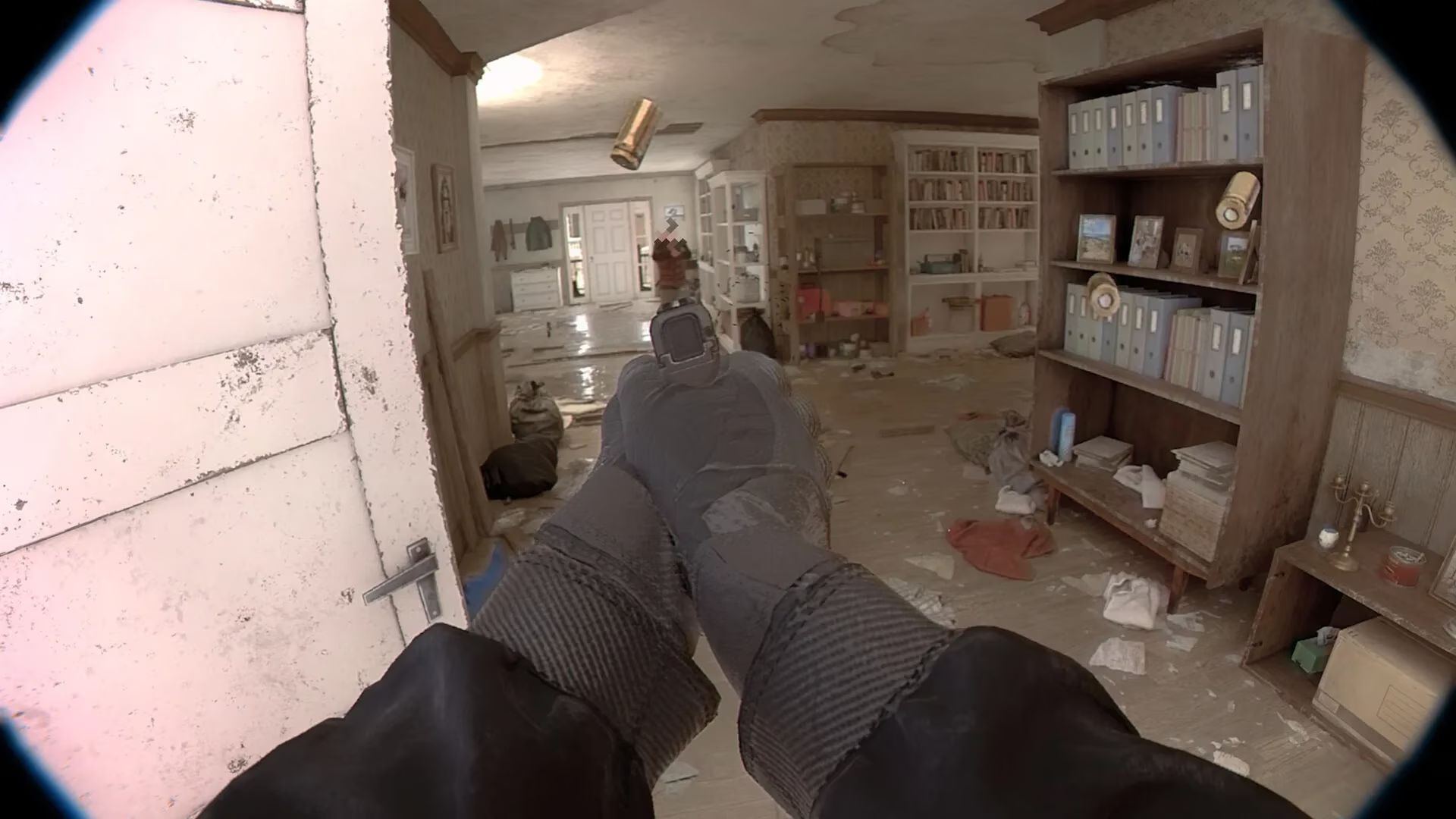
Unrecord remained the poster child for “wait, that’s a video game?” The photogrammetry-based textures, subtle camera shakes, and realistic movement created an illusion so convincing that players might try to wipe their monitor. It looked less like a game and more like a found-footage VHS that went to finishing school.
The First Descendant from NEXON leaned into looter-shooter spectacle with high-quality textures and creative creature designs. The game looked gorgeous enough to distract from the fact that the player was essentially just juggling guns and special abilities while the world burned.
Kingdom Hearts 4 continued Sora’s adventures in the real-life world of Quadratum, blending realistic and cartoony visuals like a chef mixing caviar and cereal. UE5’s lighting models and texture assets helped map that mishmash into something oddly cohesive.
Ark 2 doubled down on creature-heavy chaos with realistic textures on its dinosaurs and other beasts. The visuals looked impressive, though the real enemy remained the player’s own inventory management skills.
Hell Is Us remained delightfully cryptic, with giant swords, companion drones, and a post-apocalyptic world that defied easy description. UE5’s toolkit gave the trailer an ominous polish that made the game feel like a riddle wrapped in a render farm.
By 2026, Unreal Engine 5 had stopped being a novelty and become the industry’s default overachiever. Some of these games had already spent months making GPUs weep, while others were still hovering on the horizon like expensive promises. Either way, the engine had turned “next-gen” from a marketing phrase into a measurable cardiovascular event.