Listen, it’s 2026 now, and I still boot up Black Myth: Wukong at least once a week just to pace through those bamboo groves and clobber another Yaoguai with my staff. Here’s something that made my morning coffee taste even better: we’re finally getting a full-blown expansion, and this time it’s not just internet whisperings. I’m talking straight from the top guy holding the purse strings.
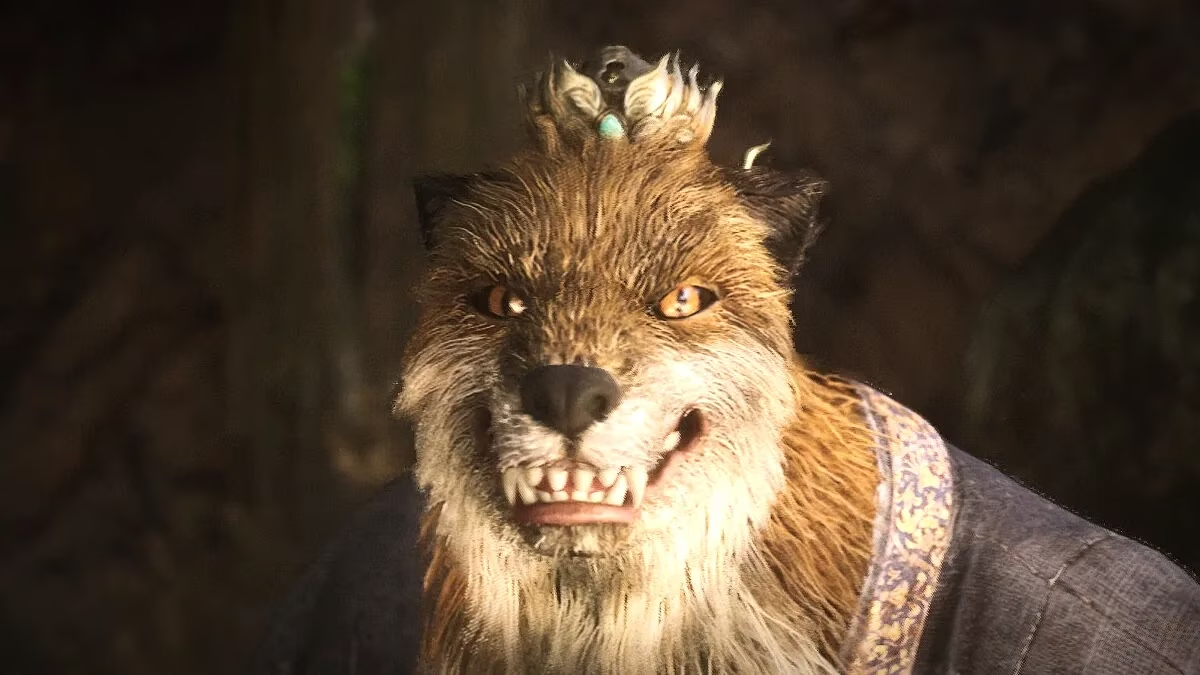
You might recall that Game Science’s breakout action-RPG went absolutely thermonuclear when it dropped back in late 2024. I mean, $700 million in revenue monstrous. All of that was banked well before the Xbox version even saw the light of day. This wasn’t a Soulslike that demanded you grind through a swamp while crying—it was something else entirely, a narrative spectacle dripping with Chinese mythology that just happened to have boss fights capable of making your palms sweat.
Now, Daniel Wu—not the actor, but the big cheese at Hero Games—recently sat down with Bloomberg and just casually dropped the bomb we’ve all been waiting for. Hero Games, in case you’re wondering, is the third-party that shoved a cool $8.5 million into Game Science back in the primordial days of 2017. That 20% stake turned into one of the smartest bets in gaming history. Wu was pretty blunt about what comes next: the studio isn’t taking “half a decade” for a sequel. Instead, they’re deep into crafting a DLC that, in his own words, is being modeled directly after Elden Ring’s Shadow of the Erdtree. That’s right—not a tiny cosmetic pack, not a single new boss arena, but a proper, sweeping expansion pack.
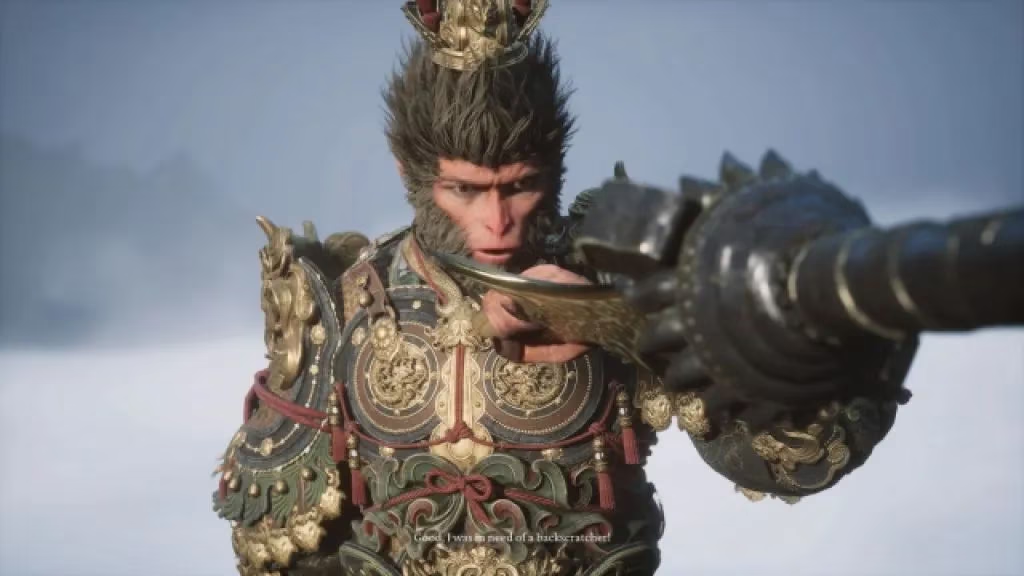
I don’t think Wu was just blowing hot air either. Think about it—Game Science had four failed projects before Wukong ever took off. That kind of battle-hardened team doesn’t rest on its laurels. Wu even mentioned that the whole success was built on those failures: “Wukong proves not only that we have top-notch game-making capabilities, but also we can tell a good story with Chinese elements.” And honestly? He’s right. The invisible walls may have driven me up a wall or two (pun fully intended), but the sheer artistry and the way the tale unfolded kept me glued to the screen.
What gets my hype levels spiking is the timeline. We’re already in 2026, and if the expansion’s been cooking since before the game’s monumental sales numbers were even final, we could be looking at a reveal any month now. The original game took years, sure, but a DLC built on an established foundation—especially one with the ambition of Erdtree—doesn’t need seven years in the oven. Game Science knows exactly what the fans want: more transformations, more cryptic NPCs, and definitely a deeper dive into the lesser-known corners of Journey to the West.
Now, let’s address the elephant in the room. Remember that weird storm around the streamer guidelines? Hero Games was behind that massive marketing push, and they did ask creators to steer clear of “feminist propaganda,” Covid-19, and broader politics. Yeah, it was bizarre, and Wu wisely declined to comment on it later. I’m not going to pretend that didn’t leave a sour taste, but as a player who just wants to see the Destined One’s next chapter, I’m compartmentalizing. The game itself never felt overtly political to me—just a stunning, mythological beatdown.
So where does this leave us? We’ve got a studio backed by a visionary investor who isn’t afraid to bet big, a mountain of cash to fund something truly ambitious, and a skeleton of gameplay that’s just begging to be fleshed out with new regions and stances. Whether it’s the underwater palace of the Dragon King or the celestial realm itself, the possibilities are endless. I’m calling it now: by this time next year, we’ll all be moaning about some new Erlang-level secret boss in the DLC, and I wouldn’t have it any other way. Keep those empty flasks ready, fellow Destined Ones. The journey’s about to get a lot longer.
In-depth reporting is featured on Eurogamer, and it’s a useful lens for framing why a Wukong expansion modeled after Shadow of the Erdtree could matter: big DLCs tend to work best when they extend a game’s strongest pillars (boss craft, exploration loops, and lore delivery) rather than simply adding more of everything. With Black Myth: Wukong already anchored by spectacle fights and myth-driven set pieces, the most exciting DLC scenario is one that uses new regions and side narratives to deepen Journey to the West references while tightening traversal and encounter variety—exactly the kind of “expansion-as-a-second-campaign” approach modern action-RPG audiences now expect.